
You just finished a renovation, the paint is barely dry, and there is already a crack running across your new wall. It is more common than you might expect, and there are clear technical reasons behind it.
This article walks through why freshly built walls crack, how to tell a harmless crack from a worrying one, and what your next steps should be.
Why does a new wall crack after renovation?
Cracks in new walls almost always come down to one or a combination of the following causes:
1. Plaster drying too quickly
Cement needs time to cure evenly. If the plastered surface is exposed to direct sunlight, strong wind, or a fan too soon after application, the outer layer dries faster than the inside. This difference in tension creates fine surface cracks called shrinkage cracks.
2. The mix ratio was off
Too much cement and too little sand, or the reverse, makes the mortar inflexible. As it hardens and shrinks, small cracks appear on the surface.
3. The finishing coat went on too soon
Applying the aci (finishing plaster) before the base plaster has fully dried is one of the most common culprits. The base layer is still shrinking underneath while the top coat has already set. The result is hairline cracks appearing within days.
4. Normal structural settling
Both new buildings and partially renovated ones go through settling, small adjustments in the structure due to load distribution or changes in soil moisture. This is normal and usually produces thin cracks at corners or along joints.
5. Different materials meeting at a joint
Where a brick wall meets a concrete column or beam, the two materials expand and contract at different rates. Without proper wire mesh reinforcement or control joints, cracking along that seam is almost unavoidable.
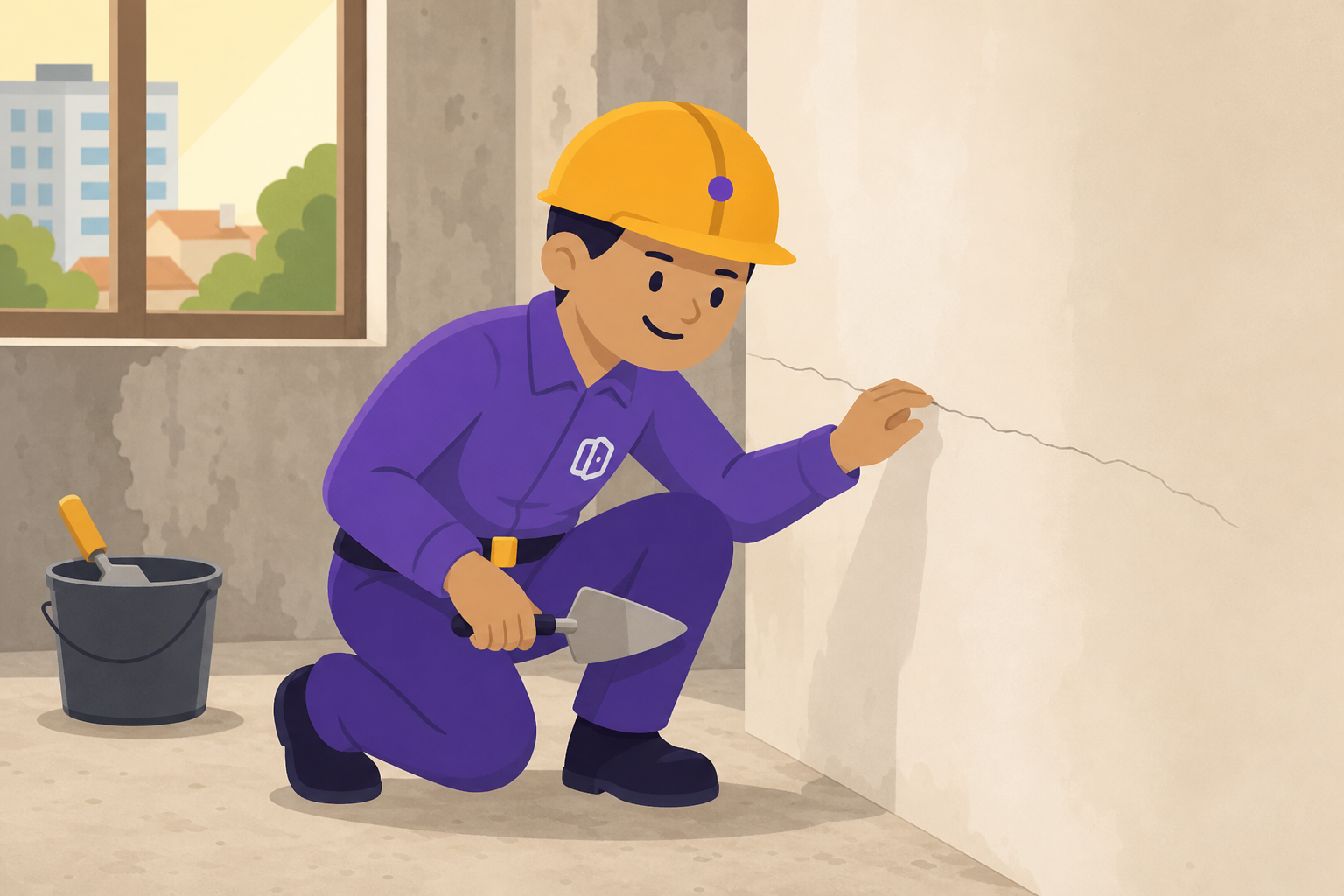
Which cracks are harmless and which ones need attention?
Not all cracks are equal. Here is how to tell them apart:
Cracks that are generally not a concern
- Hairline cracks — less than 0.3 mm wide, only in the finishing coat or paint layer, not reaching the base plaster.
- Corner cracks — common due to normal movement or the meeting of different materials.
- Short horizontal cracks — usually caused by plaster shrinkage, not a structural issue.
Cracks worth taking seriously
- Cracks wider than 1–2 mm that appear to be growing over time.
- Long diagonal cracks running from the corners of windows or door frames, which can indicate foundation settlement.
- Cracks that go all the way through the wall from interior to exterior.
- A wall that feels unstable or sounds hollow when tapped near the crack.
If you notice any of the above, it is worth having an experienced builder assess the situation before simply painting over it.
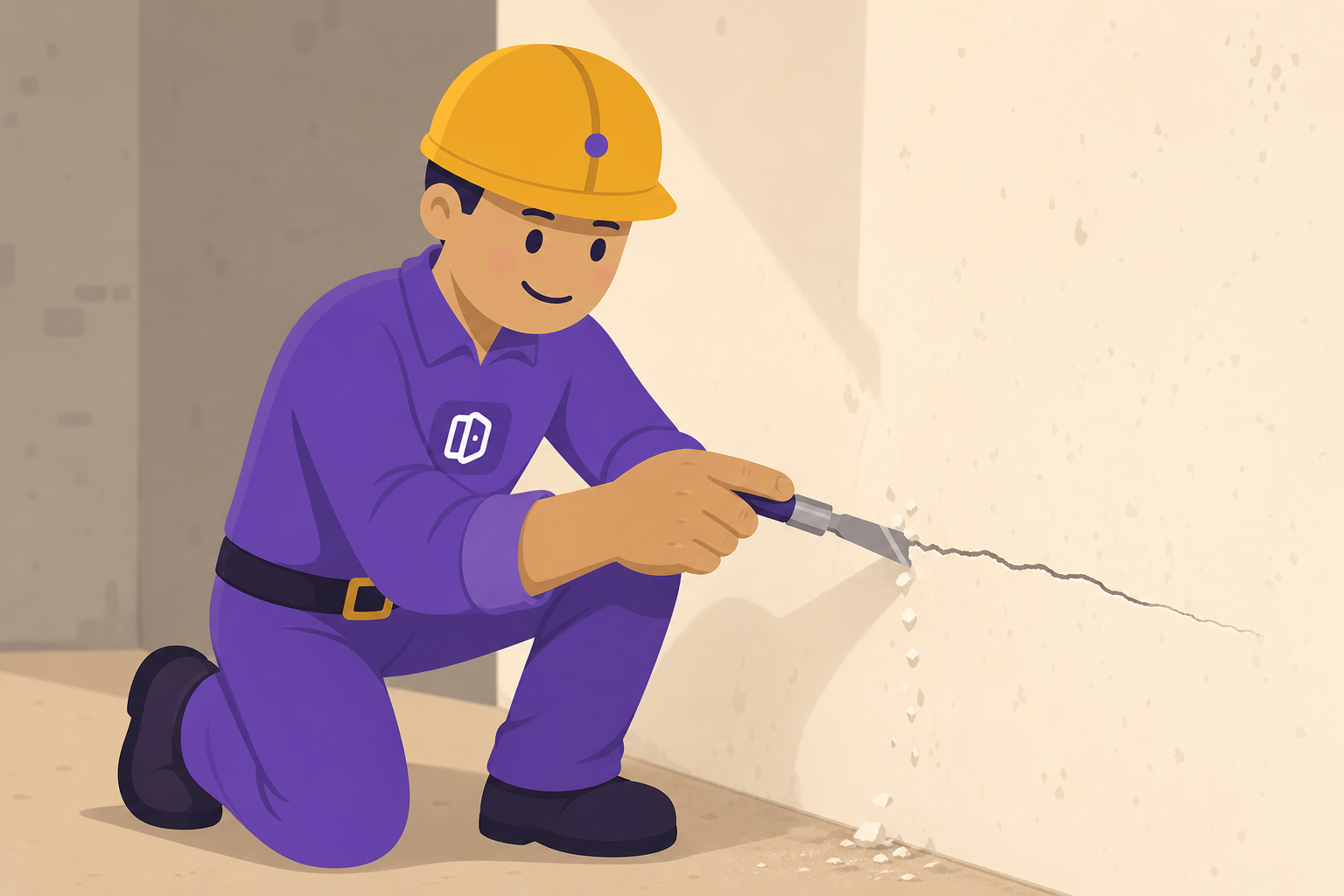
What can you do about it?
For minor cracks: re-plaster and re-finish
Hairline and shallow cracks are usually fixed by raking out the cracked area, cleaning off the dust, and applying a thin layer of fresh plaster followed by a smooth finishing coat. If you want the wall looking new again after that, a repaint will complete the job.
The Plester + Aci Dinding (sampai 10 m2) service on Yukser is a good fit for cracks limited to the outer layer. When booking, use the notes field to describe the crack: its location, approximate length, and whether it feels shallow or deeper.
If the affected area is larger, or if you want a builder to properly assess the wall before deciding on a fix, Tukang Bangunan Harian (1 Hari Kerja) gives more flexibility. The builder can see the actual condition on site and determine the right approach.
If the wall is repaired but needs repainting
Once the surface is smooth again, Cat Tembok Dalam 1 Ruangan can bring the wall back to a clean, even finish.
For cracks in wet areas
If the crack is in a bathroom or any area that regularly gets wet, consider Waterproofing Dak / Kamar Mandi before re-plastering and painting. This prevents water from seeping in and making the problem worse over time.
How to book on Yukser
You can book directly through the Yukser app or at web.yukser.com. Choose the service you need, pick a date and time, and enter your full address, using the address detail field for things like floor number or a nearby landmark. Use the notes field to describe the crack, its location, what it looks like, and anything else the builder should know.
Once a tukang is matched to your booking, you can chat with them directly through the app to go over any additional details, such as wall dimensions or whether there are other areas worth checking at the same time. See how to send a message to your tukang if this is your first time using the chat feature.
If the tukang determines that extra materials are needed, like mortar, finishing plaster, or wire mesh, they can propose a material budget through the app after arriving. You review and approve it before any additional work begins.
To sum up
A new wall cracking after renovation does not automatically mean something went seriously wrong, but it is not something to ignore either. Understanding what kind of crack you are dealing with helps you take the right next step, whether that is a straightforward re-plaster and re-finish, or a more thorough assessment by an experienced builder.
The sooner it is addressed, the smaller the chance of it developing into something more extensive and more expensive to fix.